
How to Choose Between Startups and Big Tech Giants
But intensity comes with a cost. Long hours, stress around funding milestones, and blurred boundaries between work and personal time are common.
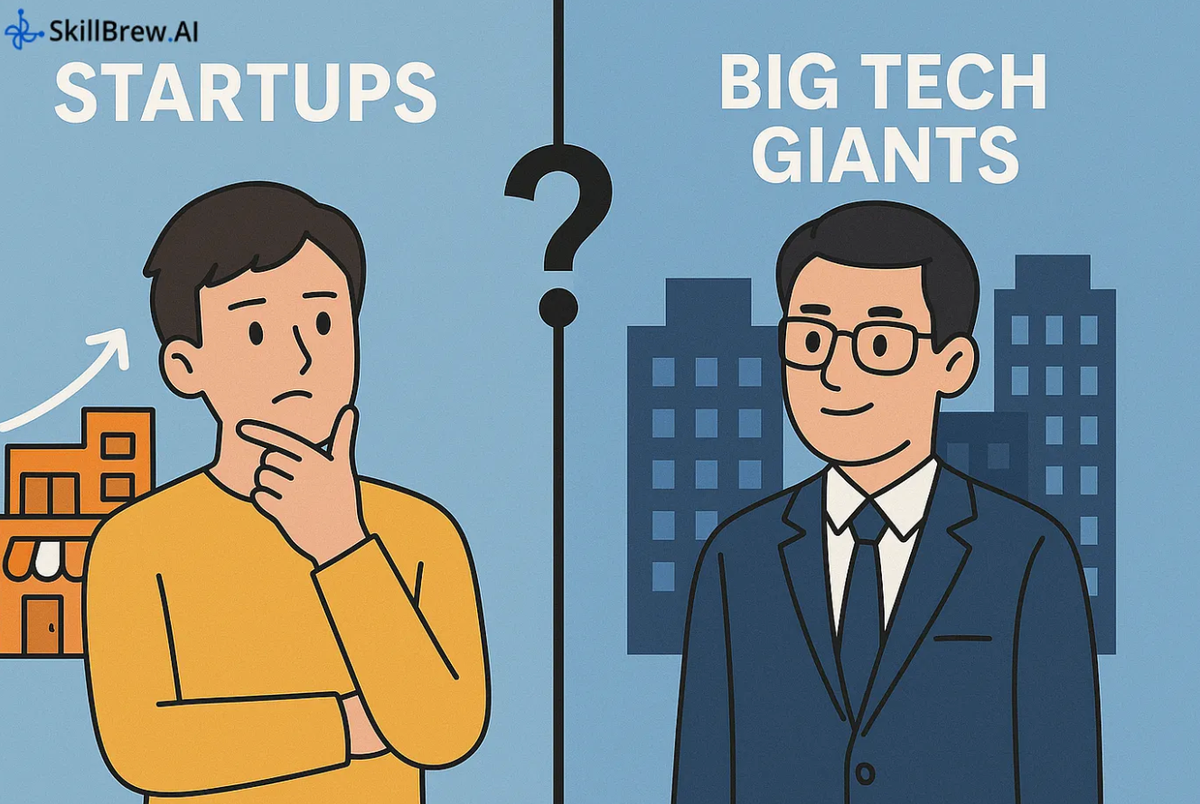
Choosing between joining a startup or a big tech company is one of the most meaningful career decisions you’ll make. Both paths can shape your professional identity, accelerate your growth, and influence your long-term opportunities. The key is understanding how these environments differ — so you can choose the one that aligns with your goals, values, and current stage of life.
Understanding the Compensation Landscape
Compensation is often the first major difference candidates notice — and for good reason.
Big tech companies typically offer highly structured and lucrative compensation packages. New graduates at companies like Google, Meta, or Microsoft frequently earn total packages in the $130,000–$145,000 range, while experienced engineers see $250,000–$350,000 or more. These offers include competitive base salaries, annual bonuses, and stock grants. The stock component carries significant weight because these companies are publicly traded, giving you immediate and predictable value.
Startups, on the other hand, compensate differently.
Early-stage companies often pay 10–20% less in base salary compared to big tech, but they offer equity — essentially a bet on the company’s future. Late-stage startups sometimes buck this trend and pay about 11.5% more than public companies, with average salaries near $145,000.
But the real X-factor is equity.
Startup equity could be life-changing if the company succeeds — but many fail, rendering those shares worthless. Your personal financial stability and risk appetite should heavily inform how you weigh this trade-off.
Day-to-Day Work Experience
Your everyday work life will feel very different depending on where you choose to go.
Life at Big Tech
In large organisations, engineers often specialise deeply. You may work on a narrow feature that millions of users rely on, but your scope will be well-defined. Processes, documentation, and systems are mature. Code reviews are thorough. Architectures follow proven patterns. And importantly, experienced engineers are almost always around to guide you.
This environment is ideal if you’re seeking:
- Clear expectations
- Strong mentorship
Exposure to systems operating at a massive scale
Life at a Startup
Startups thrive on fluidity. You might work across the entire stack, participate in architectural discussions, meet customers, or even assist with product strategy. You wear multiple hats — not just because you can, but because the company needs you to.
This pace accelerates your learning but provides less structure and fewer safety nets.
Career Development and Learning
Your long-term growth trajectory also differs in meaningful ways.
Growth at Big Tech
Large companies excel at structured growth. They offer:
- Well-defined career ladders
- Dedicated mentorship
- Abundant technical and professional development resources
- Opportunities to specialise deeply
Brand recognition also helps unlock future opportunities. The trade-off? Advancement can be slower and more competitive due to the density of top-tier talent.
Growth at Startups
Startups push you to grow by necessity. You learn quickly, often stepping into leadership roles within a few years. You become adaptable, resourceful, and comfortable with ambiguity.
However, you may miss out on exposure to large-scale engineering systems, and you’ll likely have fewer formal mentorship opportunities.
Job Security and Stability
This is where the philosophical differences between big tech and startups become personal.
Big tech companies have diversified revenue, established markets, and financial cushions. Although layoffs do happen, the company itself is unlikely to disappear.