Most Recruiters Are Scared of AI and Bet They’re Scared of the Wrong Thing.
You know, the eight thousand tiny indignities that make up most of a recruiting day. The 200-resume screening sprint before standup.
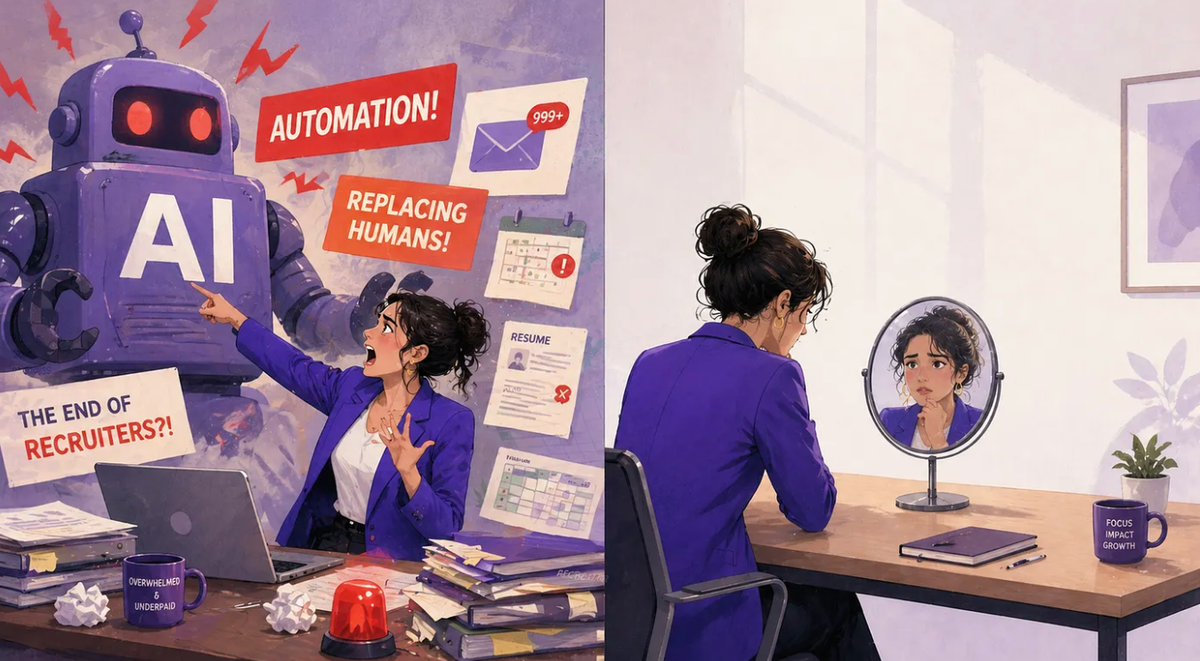
Every recruiter has had this moment.
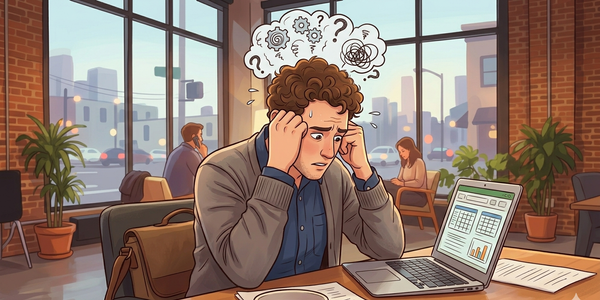
It’s a Sunday night. They’re in bed. They told themselves they’d stop scrolling LinkedIn an hour ago. And then they see it, another post from another founder explaining how he “fully replaced his recruiting function with a single AI agent” and the comments are 400 people clapping like seals.
The recruiter closes the app. Stares at the ceiling. I wonder if it’s too late to learn UX design.
This scene is happening in approximately 80,000 bedrooms right now. Maybe yours.
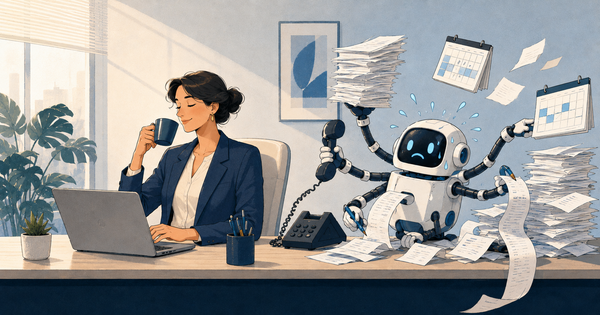
And here’s the funny thing, the fear is real, but it’s pointed at completely the wrong target. Recruiters all over the world are losing sleep over a threat that mostly isn’t coming, while the actual threat sits quietly in the corner sipping coffee, waiting to be noticed.
Let’s talk about it.
The fear everyone keeps saying out loud
Ask any recruiter what they’re worried about and you’ll get some version of the same sentence.
“AI is going to take my job.”
It’s the line. Everyone says it. They say it at conferences. They say it in Slack groups with names like “Talent Leaders Anonymous.” They say it on calls with their managers in the carefully professional voice of someone trying very hard not to sound like they’re asking for reassurance, while very obviously asking for reassurance.
And look, the fear makes sense. The marketing for AI hiring tools has been unhinged for two years. Every other LinkedIn post is “I built a recruiter in 47 minutes using ChatGPT and a Zapier subscription.” Every demo shows an AI screening a thousand resumes while a smug founder gestures at a dashboard. If you’re a real recruiter watching this, of course your stomach drops. You’re a human with a mortgage. The robots have a Series B.
So the fear is rational. The problem is it’s aimed at the wrong thing.
Because here’s what actually happens when a recruiter starts working alongside these tools, not watching demos, not reading hot takes, but actually using them, every day, for a few months.
They don’t get replaced.
They get something much weirder.
The plot twist nobody warns you about
The first thing AI eats is not the recruiter’s job. It’s the recruiter’s busywork.
You know, the eight thousand tiny indignities that make up most of a recruiting day. The 200-resume screening sprint before standup. The forty-seven-email scheduling chain with a candidate in three time zones. The “just circling back!” follow-up that secretly translates to please for the love of god respond, the hiring manager is asking. The candidate summary is written at 10pm because the debrief is at 9am. The ATS update that takes 20 minutes and means nothing to anyone.
This was the work that filled the day. This was the work that, when someone at a wedding asked “so what does a recruiter actually do?” you could vaguely gesture at and say “oh you have no idea, it’s a lot,” and they’d nod sympathetically and refill their wine.
And the AI, it turns out, is really good at this stuff. Not perfect. But good enough that within three months of decent tooling, the work that used to fill ten hours a day quietly compresses into two.
Which sounds amazing. Should sound amazing. Is, in fact, what every recruiter has been begging for since 2014.