The Career Mistakes I Wish I Avoided in My First Job
When I look back on my early professional life, there are decisions I’ve made that make me blush. Like many new college graduates, I’ve been eager, naive, and just looking for that first paycheck.
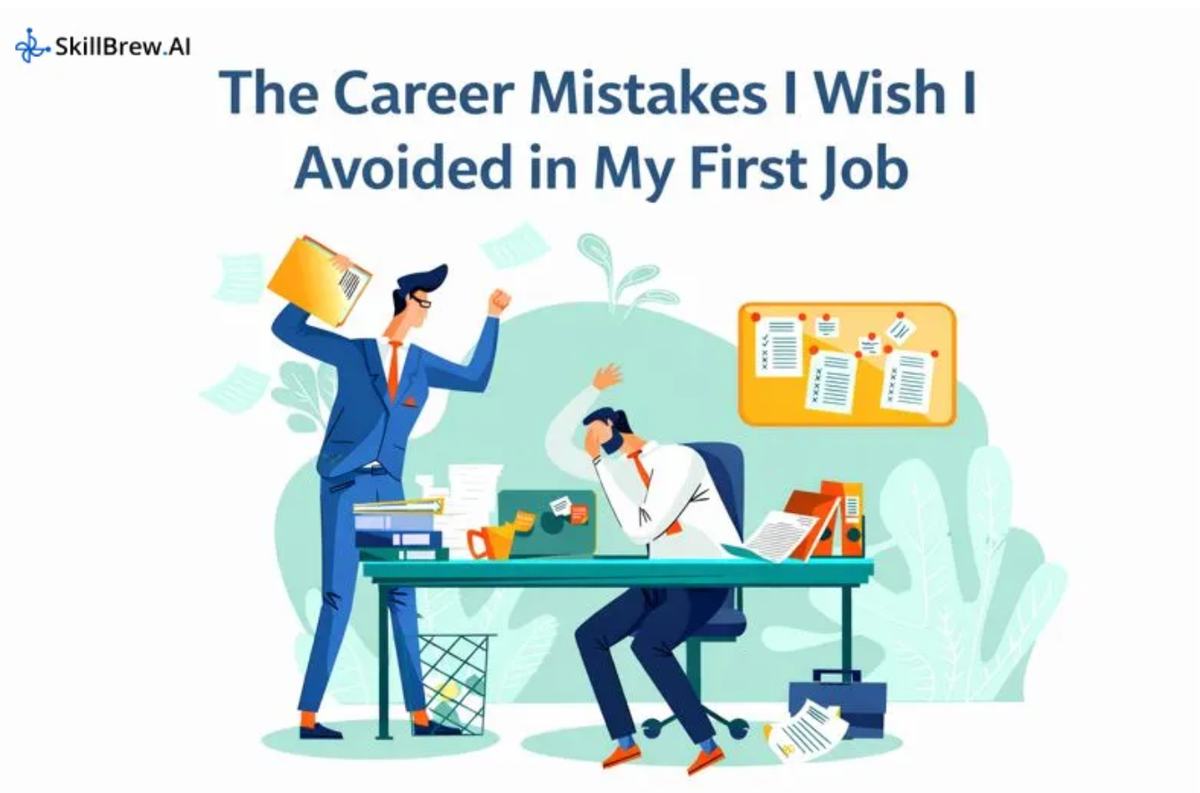
When I look back on my early professional life, there are decisions I’ve made that make me blush. Like many new college graduates, I’ve been eager, naive, and just looking for that first paycheck. I thought success meant fast growth — more money, more responsibilities, more promotion. But the more I’ve grown, the more I’ve realized it’s the foundation that’s established in that first job (or even prior) that actually influences every bit thereafter.
If I went back in time and offered advice to younger versions of myself, this is what I would ask to avoid :
1. Not Researching the Company Thoroughly Before Accepting the Offer
One of the biggest mistakes I made when I was younger was being too hasty at taking a job that offered more money than my previous opportunity without investigating more about the company. On paper, it sounded like the perfect opportunity — it paid more and had an impressive title. However, when I got into it, I found the environment was poisonous, the leadership was disorganized, and the workload was simply unmanageable — and I only stayed for less than a year.
I’d have loved to have done my research correctly — looked up reviews from employees on platforms such as Glassdoor, reviewed headlines on the viability of the company itself, even looked up people on LinkedIn that I knew were employees or former employees. Sure, money is important, but so is being able to go to an office where I don’t want to cry on a daily basis. Always ask yourself this: Does your company align with your values? Or is your company a struggling entity?
2. Selecting an Education and Field of Study Motivated by “What’s Practical Rather Than Passion”
“This is personal for me. Choosing a ‘safe’ college major because everyone said it would guarantee ‘good jobs and stability.’ It did — kind of. But I spent years feeling uninvested, like I was just getting through classes. I didn’t find enthusiasm for learning and expansion in that area.”
Several people often wish they had pursued a field they are interested in. Passion leads one to hustle, innovate, and be content in the end. Sure, pair this with common sense, but don’t neglect your passions. And, I skipped straight into college from high school. A gap year could’ve provided me some much-needed insight and avoided some of that initial exhaustion.
3. Job-Hopping Too Quickly in Search of ‘Better’
In the initial stages, I used to jump from job to job — either for better pay or a more prestigious title. I thought I was moving ahead in my career, but in retrospect, I didn’t give myself enough time to get very good at what I was doing and build adequate networking.
However, some change in the early stages of your career will be expected and will work as a fast-track tool to development as well as increased pay. The trick lies in motivation. Network to advance in terms of enhanced opportunities, development, or alignment, rather than as a resulting effect of green grass syndrome.
4. Not Taking Risks to Pivot Toward What Truly Interests Me
“I’m supposed to be working on this project I care deeply about, but I’m actually browsing job openings. Why do they always have the perfect candidate listed as having experience somewhere other than the company I’m applying for? I wonder if I could do that job. Hmm, no, it would be difficult and is not relevant to my industry, but it looks so much more interesting and fulfilling than the one I’m doing.”
This is perhaps one of the biggest regrets I have. There have been times when
Fear of starting over or losing momentum is what holds so many people back. But happiness is found through bold actions. It is perfectly fine to switch course even to go backwards for a moment. “Life is too short to work at just a job.”
5. Turning a Blind Eye to My Mental
This may be the thing that I regret the most. In my first few employment roles, I toughed out the stress, the long hours, the imposter syndrome, the familiar lump of worry in my stomach. I figured it was just normal, that everybody feels this way, that things will improve when I prove myself, that I just had to work even harder. I did not seek out therapy, did not establish healthy boundaries, did not communicate well about my feelings of being overwhelmed.
Looking back, I can see just how destructive this has been. I slowly developed burnout, my self-confidence suffered, and it spread to every other area of my life, even my job. I would have liked to consider my mental health years ago by scheduling an initial therapy appointment, learning to say no, and just realizing I need HELP.
Your mental health is not a nice-to-have — it’s the base for everything else in your professional and life pursuits. If things feel off, don’t wait to figure it out for years. Counseling, coaching, talking to friends, or even such things as journaling or exercise can make an absolutely huge difference. Your life is worth the effort to feel secure and centered, including in the midst of your professional life.
Final Thoughts
Our first job and the subsequent years are a learning curve. Failure will inevitably happen, but by reflecting on it fails turned into wisdom. If you are beginning, work on laying a good foundation: research job opportunities well, pursue your curiosity whenever possible, take risks, and most of all, maintain good mental well-being. There’s no career path that’s completely mistake-free, and regrets come with the territory of being human. But from the errors others (or I) have made, you can create a path that’s more purposeful and fulfilling.
You totally have this — now what’s one thing you can do today to make it slightly better for you in the future ?