
Why Every Developer Needs Git (Even for Solo Projects)
Once you start using Git seriously, even for small projects, it stops feeling optional. It becomes part of how you think as a developer.
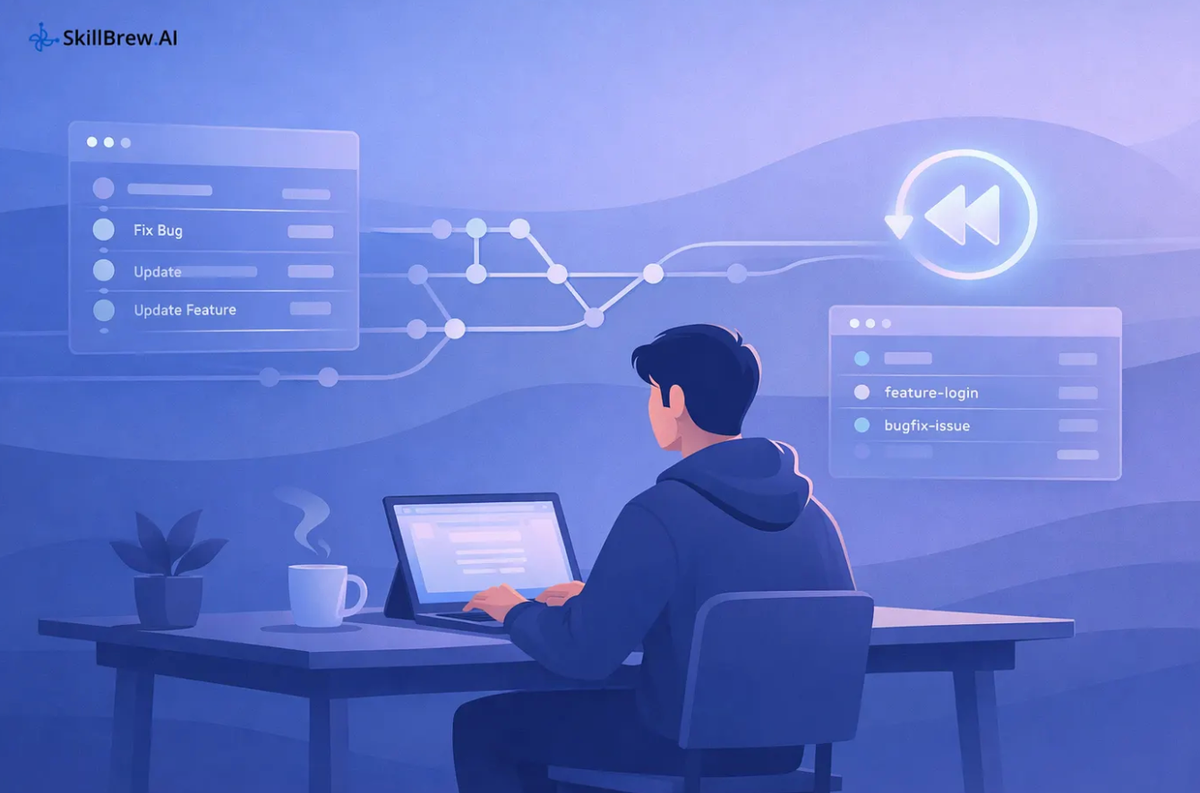
When I first started trying to figure out what tools professional developers use, a single piece of advice came up over and over: learn Git. It was suggested so frequently that I treated it like a prerequisite and started learning early on. But as I dug in deeper, a quiet doubt started forming. Of course, Git made sense for teams. Version control, collaboration, pull requests, reviews — all of that sounded great. Still, how did any of it apply to me? I wasn’t working with anyone else. I was just trying to build a few projects on my own.
At first, Git just seemed like unnecessary overhead. Why go through all the hassle of creating branches and committing changes when I could simply just save a file and be done with it?
That changed the moment I started using Git in actual projects.
The biggest realization was that Git isn’t primarily about collaboration. It’s about history and control. Git keeps a complete record of your project from the very first line of code. Every meaningful change becomes a snapshot that you can return to at any time. If something breaks, you’re not guessing what went wrong — you can see exactly what changed and when. That alone makes Git incredibly valuable for solo developers.
And then, of course, there’s the real-world aspect. Learning and using Git gives you hands-on experience with a professional-level piece of software. Even if you’re a solo act now, it’s likely a fact and a reality that you won’t remain so in the future. And using Git in conjunction with a remote repository provides free and excellent backup solutions and the advantage of working from multiple platforms without ever losing your work through using code.
In my personal projects, the process I use is simple and replicates the way that a developer in a company would work, without having to add complexity that doesn’t need to be there. My core coding is in a main branch, and the bulk of my work happens in a dev branch. Larger coding changes take place in a feature branch, allowing me to keep my focus while working in seclusion. Once everything seems good, the changes can be merged.
This is not about pretending a personal project is a product of a large company. This is about respecting your own code. Your code warrants the same protection and organisation whether you are working on a production product or a personal one.
Git is about collaboration on its surface, but at its core, it’s really a tool for developers who care about their code. Whether you’re working with a hundred people or just yourself, Git helps you go faster, break fewer things along the way, and learn more as you go.